You ever open an old draft, read the first paragraph, and immediately want to apologize to everyone you’ve ever loved?
Welcome to the emotional rollercoaster that is editing your own writing. It’s a journey full of secondhand embarrassment, self-reflection, and occasional breakthroughs… but hey, that’s the life.
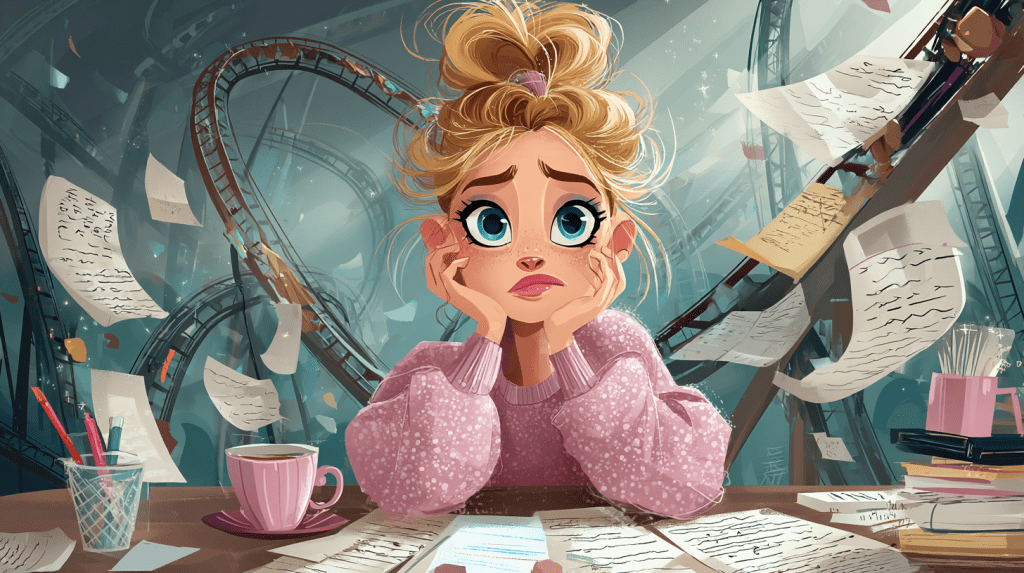
I recently got hit by the ‘I must reorganize my desk’ bug and unearthed a relic from my writing past. An old fanfic, fairly well received on fanfiction.net back in the day (and no, I will not tell you what fandom). On re-read? Absolutely horrible. The kind of cringe that triggers an instant existential crisis. I promptly stuffed the notes into the back of the drawer, where they will remain untouched until the heat death of the universe.
On paper (no pun intended), editing is a noble process. It’s about refining, polishing, and getting your book baby ready to face the world. But in practice? It feels like breaking up with a version of yourself who really, really thought they nailed it.
The First Draft Delusion
The first draft you? Starry-eyed. Passionate. Convinced you’re writing the next literary masterpiece. You didn’t need structure, you had vibes. Your dialogue was “quirky,” your metaphors were “bold,” and your pacing was… somewhere.
I once used the descriptor “he purred” five times in a single chapter. Five. A friend kindly asked if the love interest had transformed into a cat mid-conversation. At the time, I thought it was swoon worthy. In hindsight? Less purr, more yikes.
And then you, Version 2.0, show up with your red pen and your iced coffee and your “why is this chapter 3,000 words too long?” energy. Suddenly it’s not a love story. It’s a crime scene.
Editing Is Time Travel
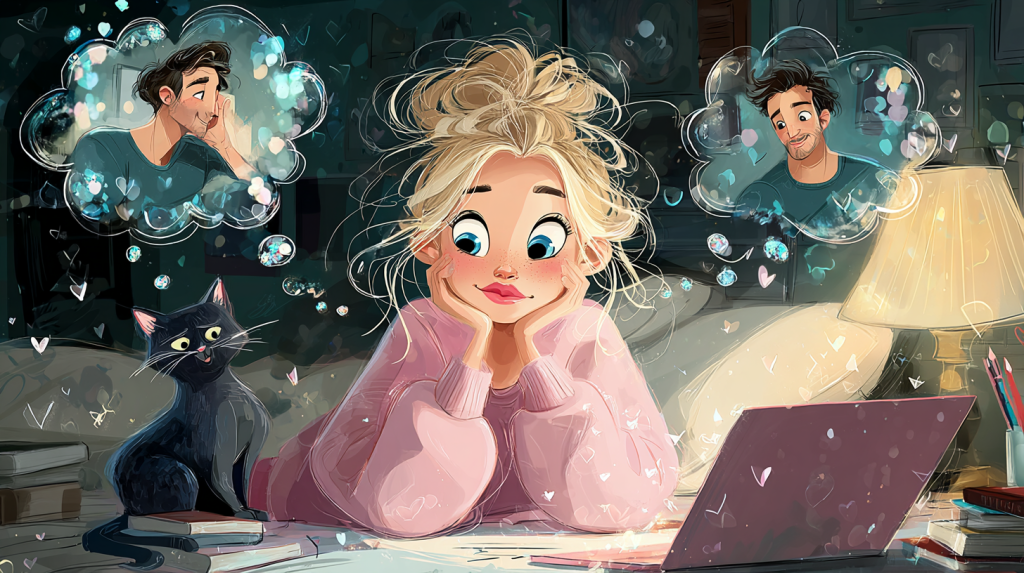
Editing isn’t just fixing commas, it’s reading the ghost of writer past and wondering who handed them a keyboard. It’s seeing that one emotional scene you poured your soul into… and realizing it reads like a melodramatic soap opera scripted by a sleep-deprived raccoon.
I used to have a serious issue with alliteration, either there was way too much or absolutely none at all. I’d start a paragraph with plain old ‘he said’ and ‘she said’ and by the end, it read like Dickens and Dostoyevsky got into a bar fight with a thesaurus. I’d also somehow end up completely off-topic from where the story was supposed to be going. Editing those sections felt less like trimming fat and more like untangling a ball of yarn made of metaphors and misfires.
Even when it’s bad, and oh, it’s bad, you have to respect the effort. Because here’s the thing: that raccoon tried. That version of you did the hard part, getting words on the page. You can’t fix what doesn’t exist, and even the cringe bits got you here.
Betrayal or Evolution?
So, is editing betrayal? Maybe it feels like it at first. You’re slicing out characters, rewriting whole arcs, and killing darlings with ruthless precision.
But really? It’s growth. You’re not betraying your past self, you’re honoring them by making the story better than they could alone.
It took me three drafts, two breakdowns, and a playlist called ‘editing rage’ before I realized the side character was actually the main character. My past self thought she was just quirky comic relief. Turns out, she was dragging the whole story behind her like a glittering emotional freight train. You’re tag-teaming with your past self. They wrote the mess. You make it art.
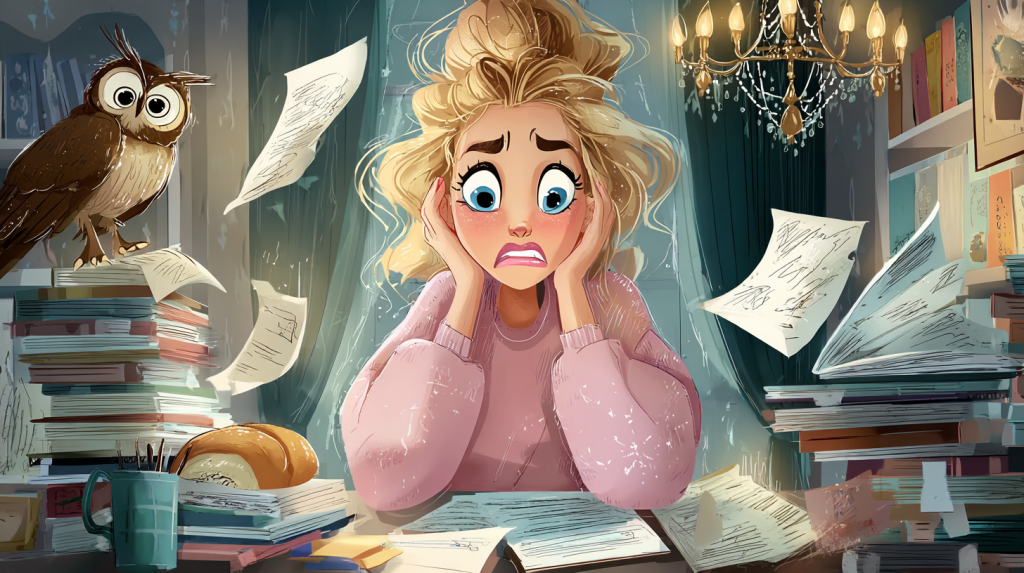
There’s no shame in the facepalms. Every writer has a graveyard of terrible scenes and plot threads that went nowhere. Self-editing often reveals the most ridiculous choices we’ve made and how far we’ve come. I once found a note to myself in the middle of a chapter that just said, “FIX THIS TRASH FIRE BEFORE ANYONE SEES IT.” And I had, in fact, left it exactly as is. The scene was a romantic moment that somehow involved a taxidermied owl, a broken chandelier, and a monologue about bread.
If you can laugh at it now, that means you’ve leveled up.
Editing your own writing hurts because it matters… it’s the ultimate test of writer growth. Because you care. Because you’ve improved.
So pick up that pen, sharpen your delete key, and keep going. Your past self got you this far and now it’s your turn to carry the torch (and maybe burn a few adverbs along the way).
Have you ever reread your early work and wanted to both high-five and strangle yourself? Tell me about your funniest or most painful editing moment in the comments!
 The Worlds of RG Newhouse