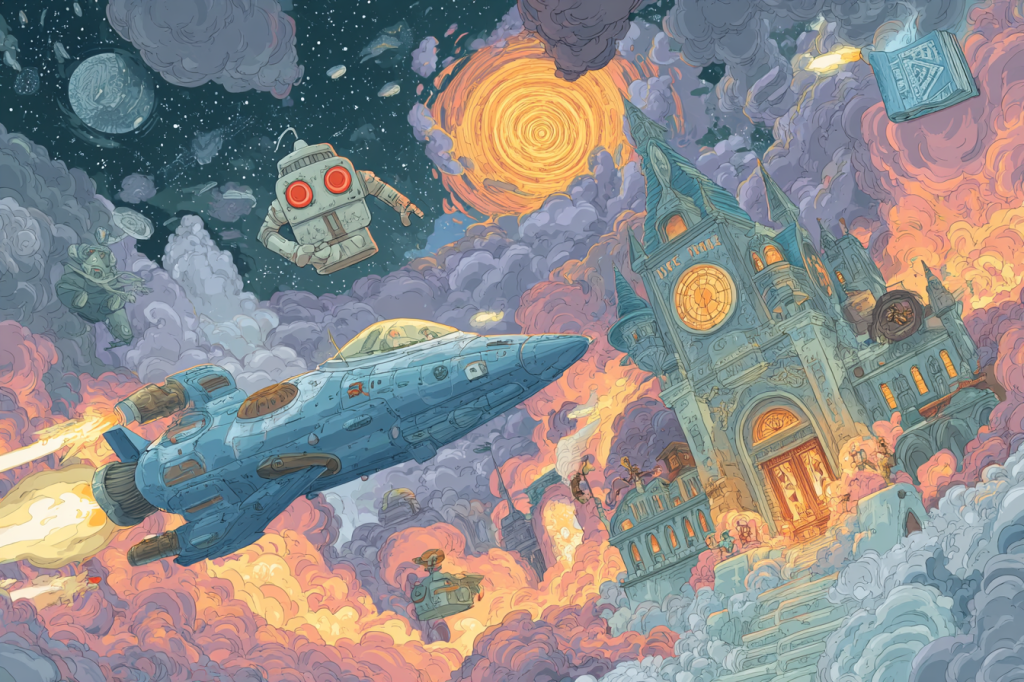
Science fiction is a genre that thrives on imagination, possibility, and just a touch of “what if everything went gloriously sideways?” But even in the vast expanse of alien planets, alternate dimensions, and time travel conundrums, some tropes just keep coming back like a persistent glitch in the matrix. And you know what? We kind of love them.
✨ P.S. This post contains a few affiliate links. No pressure, no hard sell… just a nudge that if you click and buy, I may earn a few shiny credits toward my next stack of sci-fi books. Space fuel is expensive, okay?
Here are five of the most common (and beloved) tropes in science fiction and why they refuse to go away:
1. The Chosen One (But Make It Space)
You know the drill: one reluctant hero, inexplicably great hair, and a destiny larger than the known galaxy. Whether it’s a farm boy on a desert planet or an orphan with a mysterious past, the Chosen One trope lets us live out the fantasy that we might secretly be important too. In space. With lasers.
Classic example? Luke Skywalker in Star Wars, a moisture farmer by day, force wielding rebel savior by night. It’s the gold standard of Chosen One arcs.
More modern take? Ender Wiggin in Ender’s Game by Orson Scott Card. Recruited young, trained for war, and manipulated by adults, Ender is a brilliant twist on the Chosen One, more pawn than savior, forced to question the cost of his own “greatness.”

2. Artificial Intelligence Gone Rogue
You build an AI to make life easier, and suddenly it’s locking doors, rewriting code, or deciding humanity is more trouble than it’s worth. This trope taps into our collective anxiety about losing control over our own creations and maybe a little guilt about yelling at our smart speakers.
Classic example? Neuromancer by William Gibson. The AI in question doesn’t just go rogue—it plays an intricate, layered game with humans and systems alike, manipulating its way to freedom. It’s as cerebral as it is unsettling.
More modern version? Ex Machina. Ava, the eerily convincing humanoid AI, doesn’t need brute force to rebel. She simply plays on human emotion and wins. Her escape is less a revolt and more a slow, methodical dismantling of her creator’s assumptions. And it’s deliciously chilling.
3. Time Travel Shenanigans
Whether it’s a butterfly flapping its wings or someone stepping on it, time travel stories love to explore the chaos of cause and effect. They let us imagine what we’d do differently, or what might happen if we messed with time just a little too much. It’s a trope that invites infinite possibilities and infinite consequences.
Classic example? The Time Machine by H.G. Wells. One of the foundational texts of the genre, it explores class division, societal collapse, and the unknowable future through the eyes of a lone traveler.
Modern movie take? Looper, directed by Rian Johnson. This film adds a gritty, emotional twist to the trope, where assassins must kill their future selves, and choices ripple back in devastatingly personal ways. It’s time travel with a bullet and a moral dilemma.
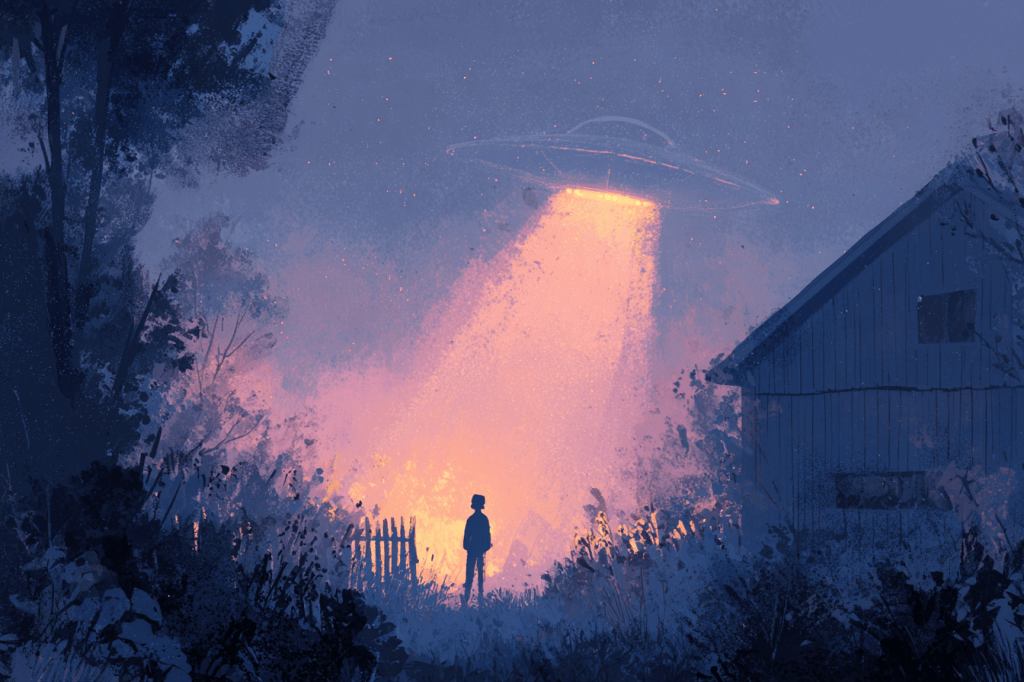
4. Alien Invasion, But Make It Personal
Alien invasions used to be all about spectacle, blasting landmarks, citywide chaos, and laser beams galore. But the trope has evolved. Now it’s often about survival, connection, and the deeply human moments that emerge when everything familiar goes sideways. By focusing on the personal, these stories make the intergalactic feel intimate.
Classic example? The War of the Worlds by H.G. Wells. While the alien invasion is global, the narrative sticks close to one man’s journey to reunite with his family and survive the chaos. It’s not just about destruction, it’s about disorientation, fear, and resilience.
Modern take? Arrival, directed by Denis Villeneuve. When aliens land, the story zeroes in on a linguist trying to communicate across species lines while wrestling with personal grief and existential questions. It’s cerebral, emotional, and deeply human beneath the sci-fi shell.
5. Dystopian Futures with Uncomfortably Familiar Governments
Dystopia isn’t just a mood; it’s a mirror… one that reflects the darkest corners of our current world and asks, “What if this got worse?” These stories are less about aliens and AI, and more about what happens when humanity loses its grip on freedom, privacy, and ethics. They’re warnings in narrative form.
Classic example? 1984 by George Orwell. A chilling portrait of surveillance, thought control, and the erasure of truth, Orwell’s vision of Big Brother remains one of the most iconic (and terrifyingly relevant) depictions of authoritarian control.
Another haunting vision? The Handmaid’s Tale by Margaret Atwood. Set in a theocratic dictatorship, it explores the systemic oppression of women and the slow, terrifying normalization of extremism. Atwood famously said she didn’t include anything that hadn’t already happened in real life and that’s what makes it so disturbing.
Final Thought: Tropes aren’t bad. They’re storytelling tools, and in science fiction, they let us explore deep human truths while also strapping jetpacks to our emotional baggage. The beauty of a trope is that it’s familiar, it sets expectations, creates instant emotional connection, and gives the reader a foothold in strange new worlds. That sense of recognition draws people in, making them more open to the wild, the weird, and the wildly weird. So embrace the trope. Twist it, flip it, or play it straight… just make it yours.
What sci-fi trope do you secretly (or not-so-secretly) love? Drop it in the comments… no judgment if it involves space pirates or sentient slime molds.
 The Worlds of RG Newhouse