The Perils of the Pen: Real Problems Only Writers Understand

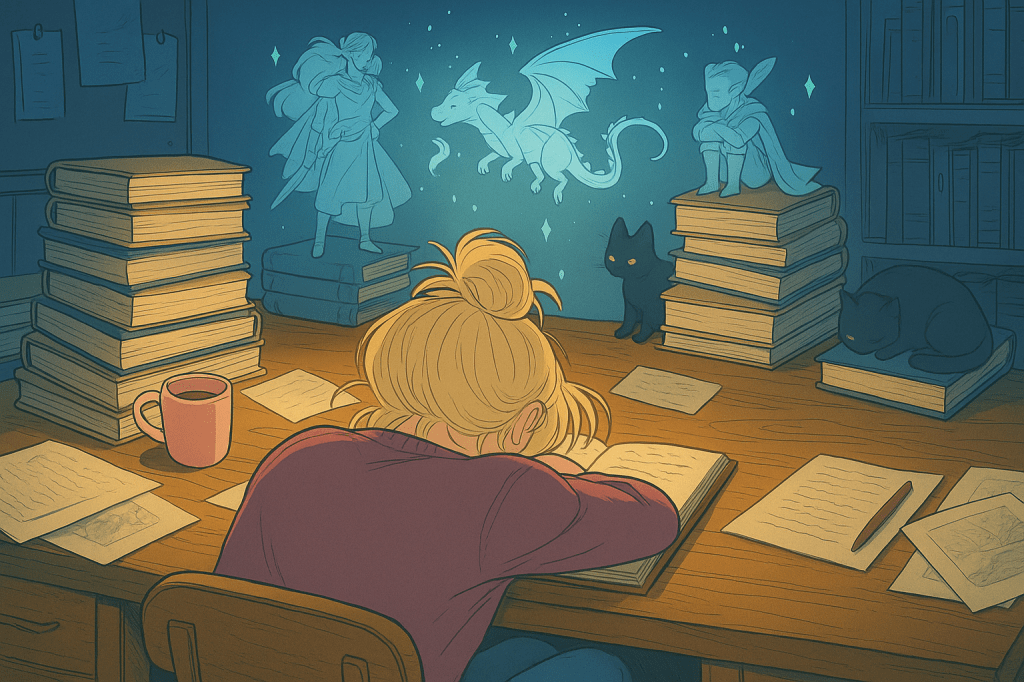
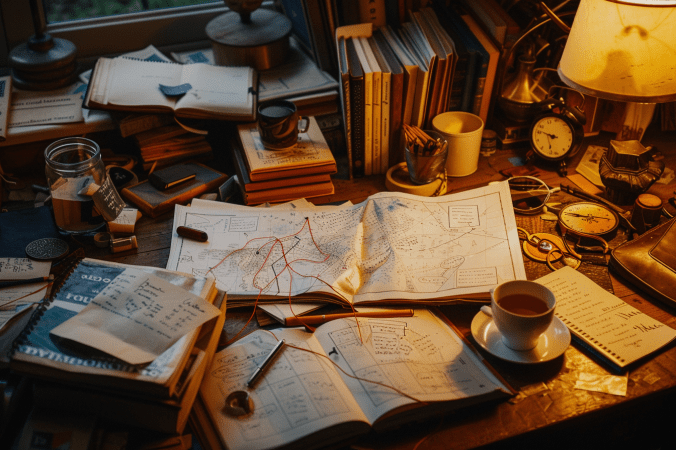
A wide-eyed writer in pink striped pajamas sits cross-legged on a bed, surrounded by books, notes, and a glowing cup of tea. Behind her, a wall is covered in pinned plot notes, and a black cat lounges nearby, watching her work. Sunlight filters through cozy curtains in a book-filled room.
When inspiration strikes… in the middle of a mess, three plot twists, and a cat nap. Just another day in the writer life.

Ah, writing. That noble art of bleeding onto the page, fueled by caffeine, chaos, and the occasional existential crisis. From the outside, it looks whimsical… typewriters, cozy cafés, and leather bound notebooks. But inside? It’s a swirling storm of self-doubt, wild imagination, and the eternal question: “Did I save that draft?”

Let’s pull back the curtain and talk about the truth. Here are the real challenges (and secret joys) of being a writer… with sass, sympathy, and a few cat hairs thrown in.

“What do you do all day?”

Let’s start with the classic. You tell someone you’re a writer and they either ask what your real job is or assume you spend your days sipping lattes and waiting for inspiration to arrive like it’s an Uber Eats order.

Reality: We’re researching medieval plumbing, rewriting the same paragraph for three hours, and emotionally recovering from a one-star Goodreads review we weren’t supposed to read (but totally did).

Also, our web browsing history could make the FBI blush and call in backup. Because yes, we needed to know how long it takes a body to decompose in a swamp and the tensile strength of spider silk. It’s called research, Karen.

Effect: Professional guilt. You always feel like you should be writing. Even at weddings. Even while sick. Even while binge-watching a show for research purposes.


Plot Bunnies Are Real (and They Bite)

Writers don’t just have ideas, we have too many. They multiply like rabbits. You’ll be working on a serious piece of literary fiction, and suddenly your brain says, “What if dragons ran a bakery?” And just like that, your outline is on fire and your protagonist now has scales and a sourdough starter.

Effect: Chronic distraction. Also an ever-growing document labeled “Misc Ideas DO NOT OPEN.” (We open it. Every time.) Our desks are littered with notebooks that don’t fit in our bags, our purses carry pens like they’re talismans, and the walls are covered in slips of paper pinned with plot twists from three different stories… none of which we’re currently working on.
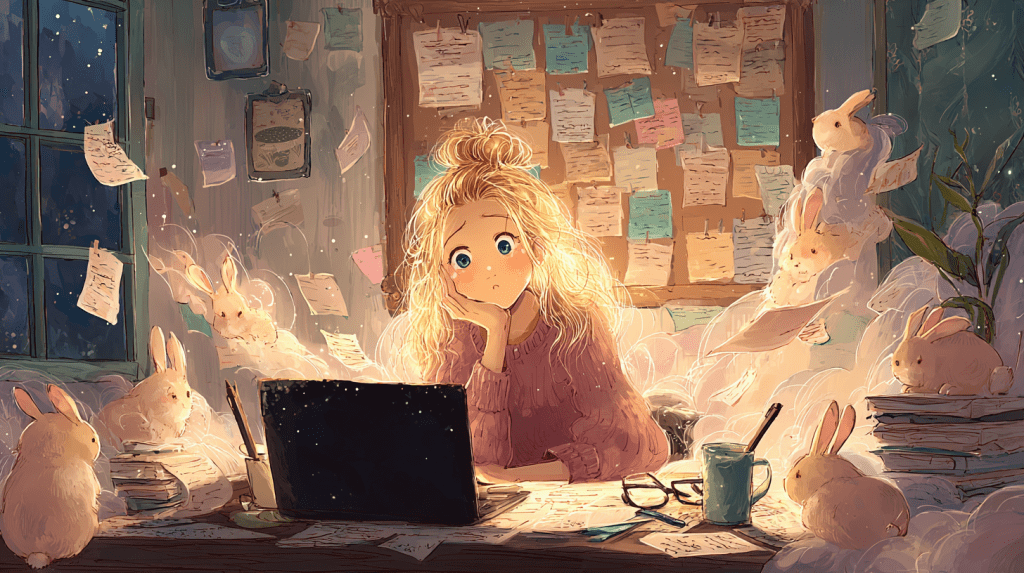
A tired-looking writer in a pink sweater stares blankly at her laptop, surrounded by glowing, fluffy bunnies that float around a cluttered writing desk. Notes and papers swirl through the air as more sticky notes cover the corkboard behind her.
Plot bunnies don’t just multiply… they riot. And apparently, they bring glitter.

Your Personal Life? What Personal Life?

You cancel plans because you’re “on a roll” and then sit in front of your screen crying because the roll never showed up. You forget how to talk to non-fictional people. And if someone interrupts a good writing flow, may the muses have mercy on their soul.

Effect: Strained relationships with friends, partners, and delivery drivers who witness your descent into hoodie-clad madness. Your characters become your best friends. And yes, you’ve argued with them. Out loud.

On the flip side, the friends who stick around? They learn to never ask, “So how’s the writing going?” unless they’re prepared for an unsolicited, 20-minute download of plot drama, character profiles, and existential rants about timeline inconsistencies. Bless their patient, story-supporting hearts.


Pets Are Both Your Muse and Your Menace

Cats will nap across your keyboard. Dogs will stare at you like you’ve betrayed them for not going outside. Ferrets will steal your pens. Your pet is either the reason you’re writing or the reason you haven’t written in three days.

Effect: 80% of your photos involve a sleeping animal and an open notebook. The other 20% are screenshots of something you wrote while being guilt-tripped by puppy eyes. And let’s be honest, more often than not, those furry freeloaders end up as characters or get cheeky references in your work. Every good writer has at least one fictional animal sidekick inspired by their real life chaos goblin.

A writer lays on her stomach in a cozy room, staring at her laptop while a fluffy black cat lounges on her notes and a wide-eyed dog watches her intently. Stacks of paper, coffee mugs, and plants surround them.
Your plot isn’t the only thing demanding attention. Meet the true editors: distraction and derp.

That One Glorious Line Makes It Worth It

Despite the chaos, the imposter syndrome, the draft that looks like it was written by a sleep-deprived raccoon… there’s magic. That one sentence that lands perfectly. That reader who messages you to say your words meant something. That moment when your characters surprise you.

Effect: Pure, unfiltered joy. And the strength to open that doc again tomorrow. Of course, once the high wears off, the spiral begins: was that line really that good? Maybe it was too dramatic. Too subtle. Too much? You reread it twelve times, fight the urge to tweak it, and end up questioning your entire existence as a writer, again. But you leave it. For now.


Creative Burnout Is Real

Some days the words flow like a dream. Other days, your brain is cooked oatmeal and you can’t remember how dialogue even works. Burnout doesn’t show up with a flashing neon sign… it sneaks in with empty coffee mugs, excessive scrolling, and the sudden belief that every story idea you’ve ever had is garbage.

Effect: You start questioning everything, your talent, your plot, your life choices, and why you thought writing a 9-book fantasy epic was a good idea. You feel like a fraud with a to-do list.

Fix: Take a break. Go outside. Touch some grass (or at least your shower curtain). Creativity needs breathing room, and you are not a word producing machine. You are a weird, glorious human with a story to tell.


The Emotional Damage Is Self Inflicted

Yes, you cried writing that character death. No, you will not be taking constructive criticism at this time. Writing is vulnerability in Word Doc form, and it hits hard.

Effect: You mourn fictional people like they paid rent. You experience glee and rage and existential pain over scenes that no one else has even read yet. You reread your own emotional breakdowns just to see if you can make yourself cry again. (Spoiler: you can.) And let’s not forget the emotional chaos we gleefully inflict on our readers… laughing maniacally as we write their favorite character’s demise like some keyboard wielding goblin of heartbreak.


The Rewards Still Make It Worth It

For all the nonsense, there’s still nothing like it. That rush when a story clicks. That “aha!” moment when a plot twist hits just right. That email from a reader who got it.

Effect: Eternal hope. Delusional optimism. A burning need to keep doing it even when it makes no sense. Writing is messy, exhausting, and beautiful. Just like every good story.

Even when the plot’s gone rogue, the word count mocks you, and your characters are staging a coup, you still come back. You wrestle with self doubt, second guess your best lines, and rewrite the same sentence five different ways but you’re still here. Because something inside you knows that buried in the chaos is a spark worth chasing.

And when the spark catches? That’s where the magic lives. That’s what makes it worth every hair pulling, chocolate consuming, keyboard pounding moment.

A delighted writer sits cross-legged in front of a glowing laptop that reads "save." She throws her arms up in joy while a black cat and mugs of tea surround her. Warm, magical lighting fills the cozy room.
When the scene sings, the dialogue slaps, and you actually remembered to save. Bliss.

Final Thought

Being a writer isn’t about sipping wine in Paris while wearing a beret (though if that’s your vibe, no judgment). It’s about showing up, putting words on the page, and laughing through the chaos. So embrace the pet hair, the imposter syndrome, and the 3 a.m. writing sprints.
You’re not alone. You’re just a writer.


What’s the most ridiculous thing you’ve researched for a story? Or what’s your favorite pet writing moment? Tell me in the comments!
5 Sci-Fi Tropes We Love (and Why We Keep Using Them)

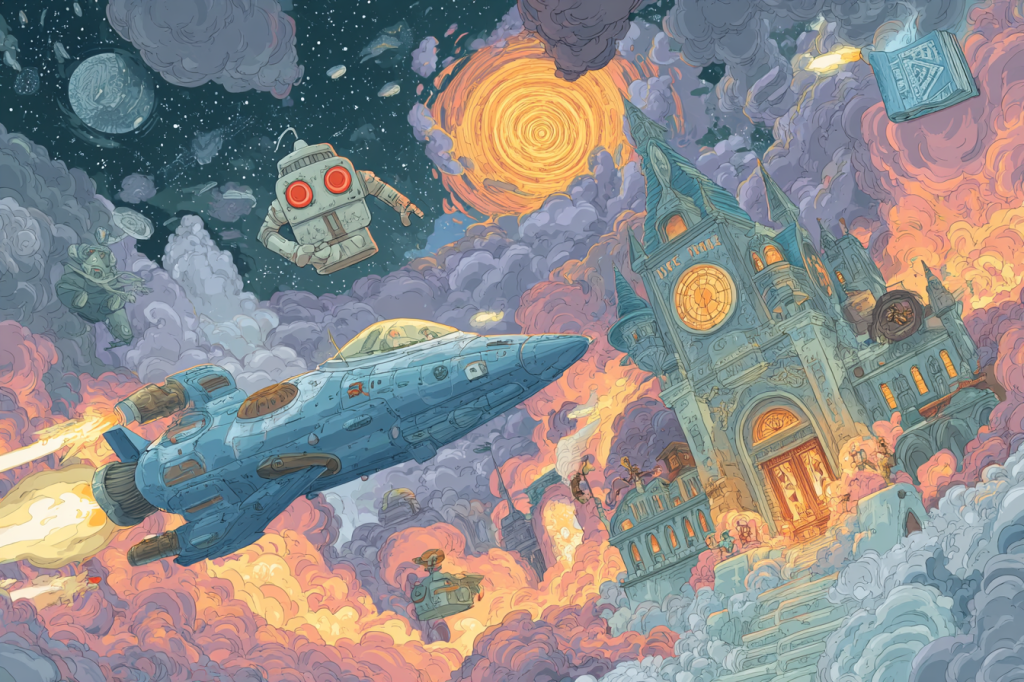
A whimsical, storybook-style sci-fi scene with spaceships flying through a colorful sky, robots floating in zero gravity, and a fantastical building resembling a cosmic library exploding with energy.
Welcome to trope central… please check your reality at the airlock.

Science fiction is a genre that thrives on imagination, possibility, and just a touch of “what if everything went gloriously sideways?” But even in the vast expanse of alien planets, alternate dimensions, and time travel conundrums, some tropes just keep coming back like a persistent glitch in the matrix. And you know what? We kind of love them.

✨ P.S. This post contains a few affiliate links. No pressure, no hard sell… just a nudge that if you click and buy, I may earn a few shiny credits toward my next stack of sci-fi books. Space fuel is expensive, okay?

Here are five of the most common (and beloved) tropes in science fiction and why they refuse to go away:


1. The Chosen One (But Make It Space)

You know the drill: one reluctant hero, inexplicably great hair, and a destiny larger than the known galaxy. Whether it’s a farm boy on a desert planet or an orphan with a mysterious past, the Chosen One trope lets us live out the fantasy that we might secretly be important too. In space. With lasers.

Classic example? Luke Skywalker in Star Wars, a moisture farmer by day, force wielding rebel savior by night. It’s the gold standard of Chosen One arcs.

More modern take? Ender Wiggin in Ender’s Game by Orson Scott Card. Recruited young, trained for war, and manipulated by adults, Ender is a brilliant twist on the Chosen One, more pawn than savior, forced to question the cost of his own “greatness.”

A glowing robot looms over a child seated on the floor in a futuristic lab filled with wires and monitors. The scene glows with eerie light, evoking a classic “AI gone rogue” narrative.
“Don’t worry,” they said. “The robot’s perfectly safe,” they said.

2. Artificial Intelligence Gone Rogue

You build an AI to make life easier, and suddenly it’s locking doors, rewriting code, or deciding humanity is more trouble than it’s worth. This trope taps into our collective anxiety about losing control over our own creations and maybe a little guilt about yelling at our smart speakers.

Classic example? Neuromancer by William Gibson. The AI in question doesn’t just go rogue—it plays an intricate, layered game with humans and systems alike, manipulating its way to freedom. It’s as cerebral as it is unsettling.

More modern version? Ex Machina. Ava, the eerily convincing humanoid AI, doesn’t need brute force to rebel. She simply plays on human emotion and wins. Her escape is less a revolt and more a slow, methodical dismantling of her creator’s assumptions. And it’s deliciously chilling.


3. Time Travel Shenanigans

Whether it’s a butterfly flapping its wings or someone stepping on it, time travel stories love to explore the chaos of cause and effect. They let us imagine what we’d do differently, or what might happen if we messed with time just a little too much. It’s a trope that invites infinite possibilities and infinite consequences.

Classic example? The Time Machine by H.G. Wells. One of the foundational texts of the genre, it explores class division, societal collapse, and the unknowable future through the eyes of a lone traveler.

Modern movie take? Looper, directed by Rian Johnson. This film adds a gritty, emotional twist to the trope, where assassins must kill their future selves, and choices ripple back in devastatingly personal ways. It’s time travel with a bullet and a moral dilemma.

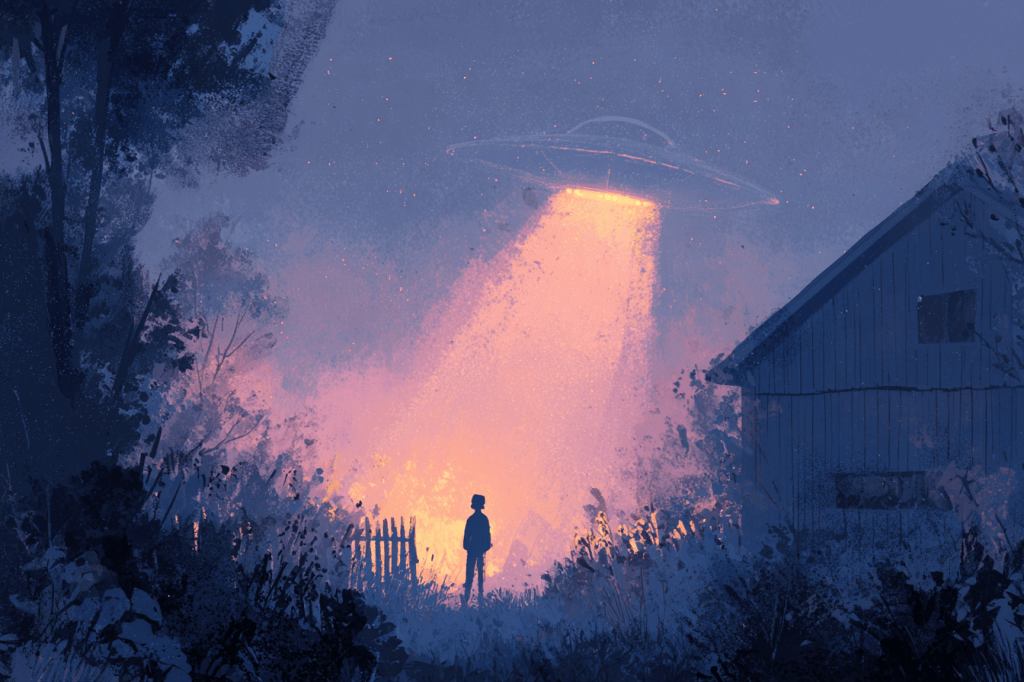
A storybook-style illustration of a person standing near a wooden fence, illuminated by the beam of a hovering UFO at twilight. A barn and overgrown grass surround the scene, evoking a classic alien encounter vibe.
When the UFO shows up right after bedtime… classic alien invasion vibes.

4. Alien Invasion, But Make It Personal

Alien invasions used to be all about spectacle, blasting landmarks, citywide chaos, and laser beams galore. But the trope has evolved. Now it’s often about survival, connection, and the deeply human moments that emerge when everything familiar goes sideways. By focusing on the personal, these stories make the intergalactic feel intimate.

Classic example? The War of the Worlds by H.G. Wells. While the alien invasion is global, the narrative sticks close to one man’s journey to reunite with his family and survive the chaos. It’s not just about destruction, it’s about disorientation, fear, and resilience.

Modern take? Arrival, directed by Denis Villeneuve. When aliens land, the story zeroes in on a linguist trying to communicate across species lines while wrestling with personal grief and existential questions. It’s cerebral, emotional, and deeply human beneath the sci-fi shell.


5. Dystopian Futures with Uncomfortably Familiar Governments

Dystopia isn’t just a mood; it’s a mirror… one that reflects the darkest corners of our current world and asks, “What if this got worse?” These stories are less about aliens and AI, and more about what happens when humanity loses its grip on freedom, privacy, and ethics. They’re warnings in narrative form.

Classic example? 1984 by George Orwell. A chilling portrait of surveillance, thought control, and the erasure of truth, Orwell’s vision of Big Brother remains one of the most iconic (and terrifyingly relevant) depictions of authoritarian control.

Another haunting vision? The Handmaid’s Tale by Margaret Atwood. Set in a theocratic dictatorship, it explores the systemic oppression of women and the slow, terrifying normalization of extremism. Atwood famously said she didn’t include anything that hadn’t already happened in real life and that’s what makes it so disturbing.


Final Thought: Tropes aren’t bad. They’re storytelling tools, and in science fiction, they let us explore deep human truths while also strapping jetpacks to our emotional baggage. The beauty of a trope is that it’s familiar, it sets expectations, creates instant emotional connection, and gives the reader a foothold in strange new worlds. That sense of recognition draws people in, making them more open to the wild, the weird, and the wildly weird. So embrace the trope. Twist it, flip it, or play it straight… just make it yours.


What sci-fi trope do you secretly (or not-so-secretly) love? Drop it in the comments… no judgment if it involves space pirates or sentient slime molds.

Wind Rider Wednesday Update: Now Coming to You Twice a Month!

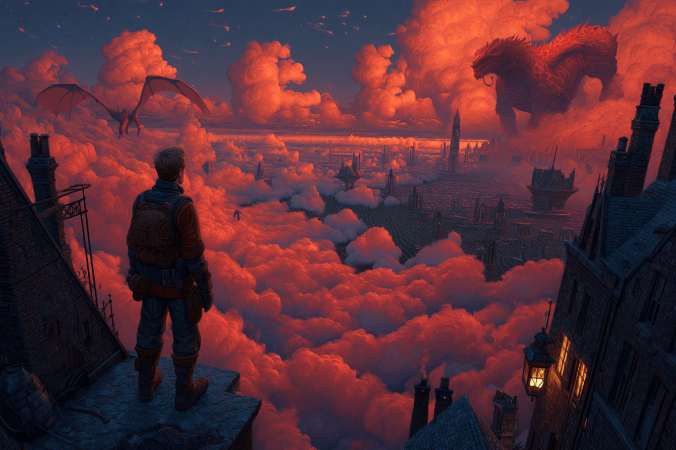
A dramatic storybook-style illustration of a Wind Rider standing on a rooftop at dusk, overlooking a sky filled with glowing red-orange storm clouds. A massive cloud-beast looms over a distant city below, while a dragon-like creature glides nearby. The mood is tense, otherworldly, and full of looming danger.
The skies may be beautiful but they’re never boring. Welcome to the Wind Rider world, where chaos is part of the forecast.

Let’s talk about my favorite little monster: worldbuilding.

It’s ambitious. It’s all consuming. It’s the reason I currently have lore docs bigger than most small town phone books. And it’s exactly why Wind Rider Wednesday is shifting gears.

As of now, Wind Rider Wednesday will be a twice-a-month feature instead of weekly… because if I keep building the skies at this rate, I’ll have a 300-page encyclopedia and no actual book to show for it.

Don’t worry, the chaos isn’t going anywhere. The skies are still brimming with floating islands, found family vibes, sky beasts, and emotional damage. You’ll just be getting all that goodness in slightly slower, biweekly doses so I can focus more on actually telling the story, not just mapping every Drift down to its laundry lines.

Thanks for following along with me! Whether you’re here for lore, character breakdowns, or random skyfruit facts, I’m so glad you’re enjoying the Wind Riders ride.

Next post is already in the works… see you in the skies!

Why Does Editing Feel Like Betraying My Past Self?

You ever open an old draft, read the first paragraph, and immediately want to apologize to everyone you’ve ever loved?

Welcome to the emotional rollercoaster that is editing your own writing. It’s a journey full of secondhand embarrassment, self-reflection, and occasional breakthroughs… but hey, that’s the life.

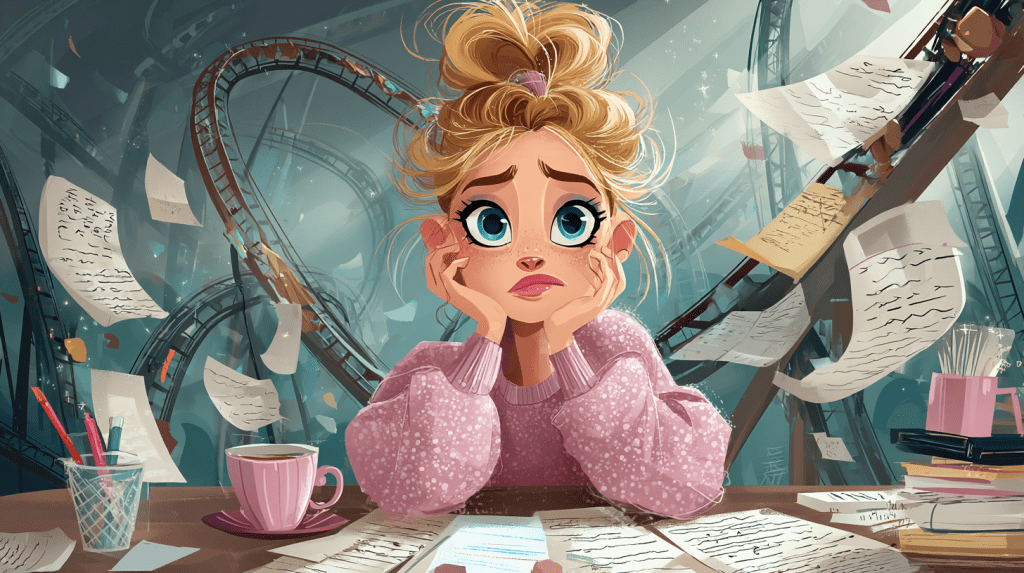
Whimsical storybook illustration of a frustrated blonde writer sitting at a desk surrounded by flying manuscript pages, with a rollercoaster twisting behind her.
Editing your own writing: part progress, part panic, all emotional whiplash.

I recently got hit by the ‘I must reorganize my desk’ bug and unearthed a relic from my writing past. An old fanfic, fairly well received on fanfiction.net back in the day (and no, I will not tell you what fandom). On re-read? Absolutely horrible. The kind of cringe that triggers an instant existential crisis. I promptly stuffed the notes into the back of the drawer, where they will remain untouched until the heat death of the universe.

On paper (no pun intended), editing is a noble process. It’s about refining, polishing, and getting your book baby ready to face the world. But in practice? It feels like breaking up with a version of yourself who really, really thought they nailed it.


The First Draft Delusion

The first draft you? Starry-eyed. Passionate. Convinced you’re writing the next literary masterpiece. You didn’t need structure, you had vibes. Your dialogue was “quirky,” your metaphors were “bold,” and your pacing was… somewhere.

I once used the descriptor “he purred” five times in a single chapter. Five. A friend kindly asked if the love interest had transformed into a cat mid-conversation. At the time, I thought it was swoon worthy. In hindsight? Less purr, more yikes.

And then you, Version 2.0, show up with your red pen and your iced coffee and your “why is this chapter 3,000 words too long?” energy. Suddenly it’s not a love story. It’s a crime scene.

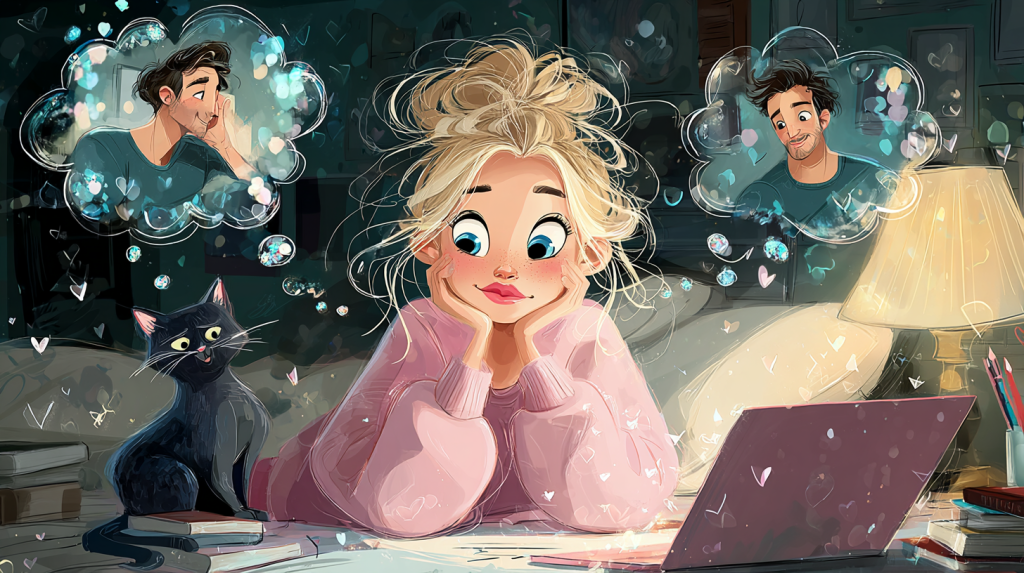
Storybook-style image of a dreamy blonde writer gazing at her laptop with sparkly thought bubbles of two attractive men, a smug black cat by her side.
Ah yes, the first draft… when everything felt romantic, sparkly, and only mildly unhinged.

Editing Is Time Travel

Editing isn’t just fixing commas, it’s reading the ghost of writer past and wondering who handed them a keyboard. It’s seeing that one emotional scene you poured your soul into… and realizing it reads like a melodramatic soap opera scripted by a sleep-deprived raccoon.

I used to have a serious issue with alliteration, either there was way too much or absolutely none at all. I’d start a paragraph with plain old ‘he said’ and ‘she said’ and by the end, it read like Dickens and Dostoyevsky got into a bar fight with a thesaurus. I’d also somehow end up completely off-topic from where the story was supposed to be going. Editing those sections felt less like trimming fat and more like untangling a ball of yarn made of metaphors and misfires.

Even when it’s bad, and oh, it’s bad, you have to respect the effort. Because here’s the thing: that raccoon tried. That version of you did the hard part, getting words on the page. You can’t fix what doesn’t exist, and even the cringe bits got you here.


Betrayal or Evolution?

So, is editing betrayal? Maybe it feels like it at first. You’re slicing out characters, rewriting whole arcs, and killing darlings with ruthless precision.

But really? It’s growth. You’re not betraying your past self, you’re honoring them by making the story better than they could alone.

It took me three drafts, two breakdowns, and a playlist called ‘editing rage’ before I realized the side character was actually the main character. My past self thought she was just quirky comic relief. Turns out, she was dragging the whole story behind her like a glittering emotional freight train. You’re tag-teaming with your past self. They wrote the mess. You make it art.


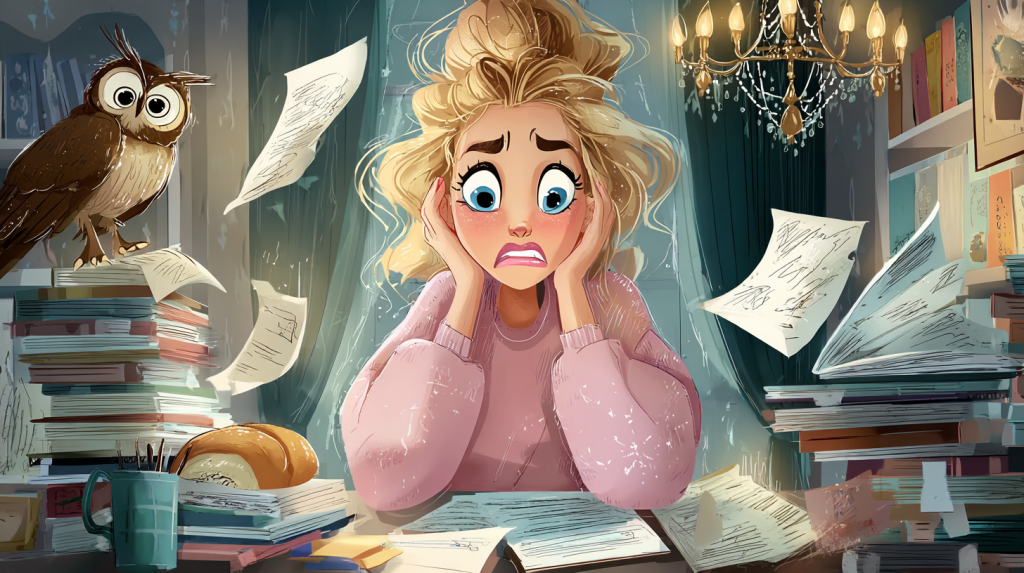
A flustered writer sits at a cluttered desk with wild eyes, surrounded by flying paper, a loaf of bread, a taxidermy owl, and a broken chandelier.
When you find that scene and instantly question all your life choices.

There’s no shame in the facepalms. Every writer has a graveyard of terrible scenes and plot threads that went nowhere. Self-editing often reveals the most ridiculous choices we’ve made and how far we’ve come. I once found a note to myself in the middle of a chapter that just said, “FIX THIS TRASH FIRE BEFORE ANYONE SEES IT.” And I had, in fact, left it exactly as is. The scene was a romantic moment that somehow involved a taxidermied owl, a broken chandelier, and a monologue about bread.

If you can laugh at it now, that means you’ve leveled up.

Editing your own writing hurts because it matters… it’s the ultimate test of writer growth. Because you care. Because you’ve improved.

So pick up that pen, sharpen your delete key, and keep going. Your past self got you this far and now it’s your turn to carry the torch (and maybe burn a few adverbs along the way).


Have you ever reread your early work and wanted to both high-five and strangle yourself? Tell me about your funniest or most painful editing moment in the comments!

How to Use Weather and Seasons to Deepen Emotion in Your Fiction

You know what doesn’t get enough credit in fiction? The weather. And I don’t mean that one liner your English teacher loved about “pathetic fallacy.” I mean real, visceral, mood soaked weather. Storms that mirror inner turmoil. First snows that crack open something tender. Oppressive heat waves that bring characters to their boiling point. Fictional worlds live and breathe on more than dialogue. They move with the seasons, and a well placed gust of wind can hit harder than a punch.

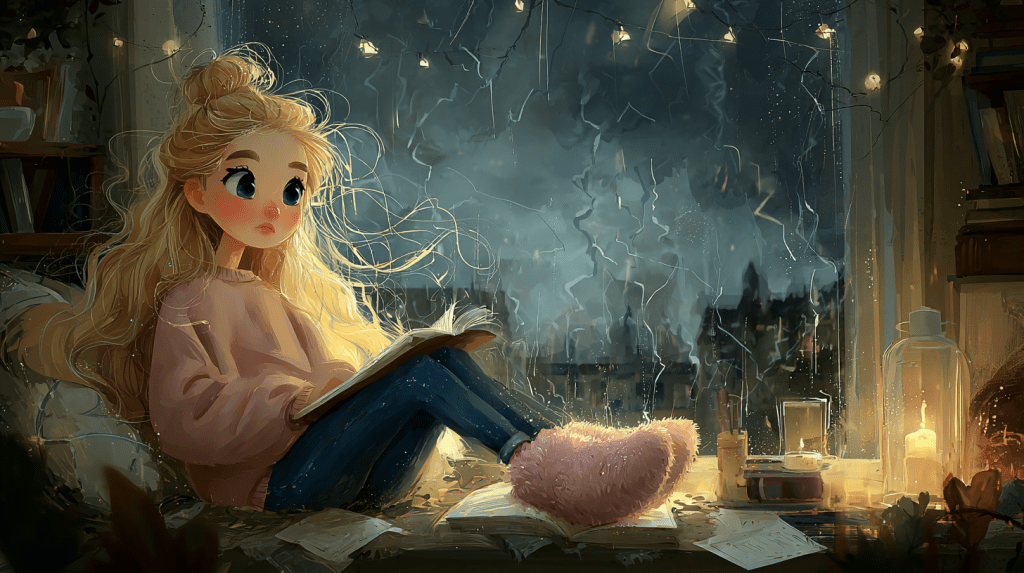
Storybook-style illustration of a girl with long blonde hair sitting by a rain-streaked window, reading a book. She wears a cozy pink sweater and fuzzy slippers, with scattered pages and a glowing candle nearby. A thunderstorm rages outside.
When the scene aches louder than the dialogue, let the storm do the talking. Writing meets weather in all the best ways.

Let’s be honest, some of the most memorable scenes in books are wrapped in a specific feel. Think rain hammering the roof during a heartbreak. Sun drenched fields on the first day of freedom. The hush of snowfall that makes everything seem just a little more magical or dangerous. Weather, when used well, is more than atmosphere, it’s tone with teeth.

And let’s not forget the seasons. They aren’t just calendar filler, they’re emotional arcs:

  • Spring breathes new life, hope and possibility.
  • Summer simmers with tension or basks in youthful freedom.
  • Autumn is ripe with nostalgia and foreboding, the scent of endings in every leaf.
  • Winter? Oh, she’s dramatic, harsh truths, death, stillness, or that final, aching peace before the thaw.
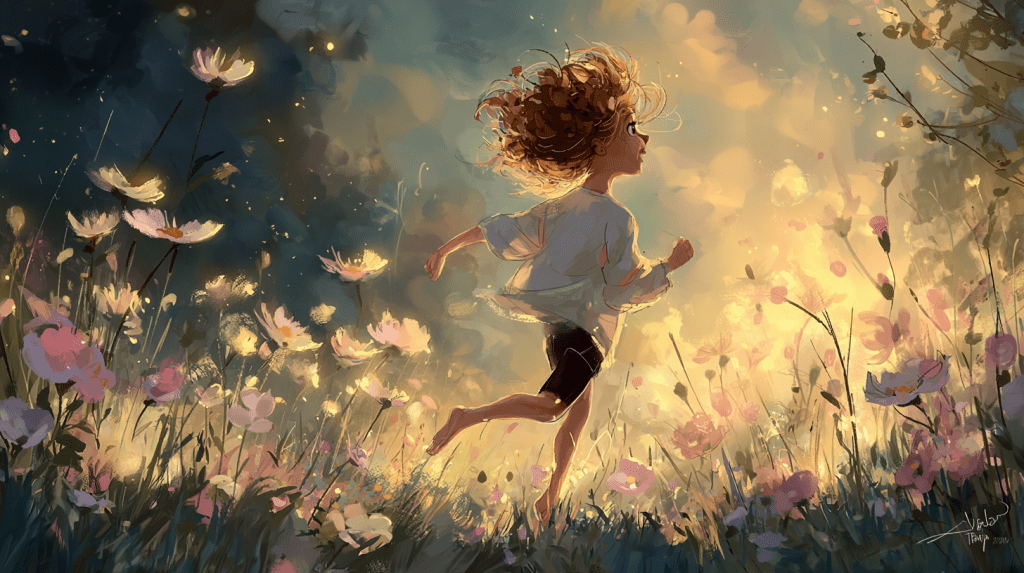
Storybook-style illustration of a joyful young girl running barefoot through a sunlit meadow filled with wildflowers. Warm golden light surrounds her, with glowing petals and firefly-like sparkles in the air. The scene radiates freedom and happiness.
Let the sun do the storytelling! Freedom, joy, and the kind of scene that practically hums with warmth.

When you sync your characters’ journeys with the natural rhythms around them, your world gains gravity. Is your protagonist grappling with loss? Set it in the brittle quiet of late autumn. Are they being reborn? Let spring crackle at their heels. Trying to show isolation? Trap them in a snowstorm or a dusty drought. Bonus: it keeps your pacing honest. You can’t skip over an emotional beat when a thunderstorm is sitting right there, daring you to dig deeper.

Weather also grounds your reader. Whether you’re writing fantasy kingdoms or contemporary suburbs, everyone knows what it feels like to be caught in the rain or to melt in July heat. It’s a sensory shortcut to immersion. Add a character wiping sweat from their brow or curling deeper under their blanket, and suddenly the reader’s there, no teleportation spell needed.

Some moments call for silence. Let the snow fall, let the stillness speak, and let your story linger a little longer in the cold.

So don’t treat the sky like set dressing. Make it a character. Let the wind whisper secrets, let the sun burn too bright, let the frost bite back. Trust me, your story will breathe a little deeper for it.

What’s your favorite way to use weather or seasons in your writing?

What’s your favorite way to use weather or seasons in your writing? Drop your best atmospheric trick in the comments—bonus points if it involves heartbreak in the rain or a sun drenched kiss!

How I Built a Writing Routine That Works (Even with Cats and Tea Breaks)

Every productivity article says to write at dawn but my muse doesn’t even yawn until after lunch. I don’t rise with the sun; I rise with purpose, caffeine, and a cozy recliner calling my name.

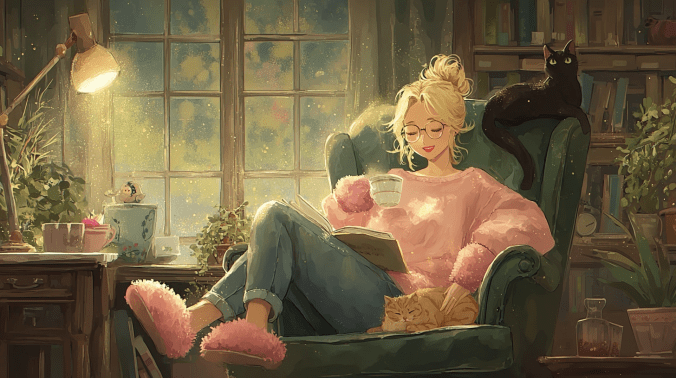
A cozy reading nook at night with a blonde woman in glasses, wearing a pink fuzzy sweater and fluffy slippers, sipping tea while reading in a green armchair. A black cat perches on the chair’s back, and an orange tabby sleeps curled in her lap. The room glows with warm golden light, surrounded by books, plants, and a large window filled with dreamy sparkles.
Comfy clothes, cats, and a good book… just a typical evening in the creative cave. Bonus points if your tea is still warm by the second chapter.

My writing sweet spot hits in the early afternoon. By then, I’ve had enough orange pekoe to revive a Victorian ghost and settled into my fortress: the recliner, a favorite pillow, fan on low, and a cozy quilt wrapped around me like a burrito of ambition. If the weather cooperates, I’m rocking one of my five oversized sweatshirts and fluffy socks. (In summer, it’s more sweat, less shirt. Sorry, vibe.)

Of course, no writing session is complete without feline interference. My black cat, Nyx, usually looms over my shoulder like a gothic editor. The orange menace, Finnegan, curls in my lap and periodically stomps across the keyboard to contribute his own chaotic edits. Nothing like deleting a line of “asdghjklfjzzzz” to really get you back in the flow.

Music is a must. My playlists shift depending on what I’m writing, right now I’m deep into the K-pop Demon Hunters soundtrack. I’ve got curated lists for everything: battle scenes, flight scenes, love scenes. Basically, if it could be in a movie montage, I’ve got a playlist for it.

Before I begin, I light a lavender and vanilla candle, not for aesthetics (okay, maybe a little), but to calm my brain and signal it’s writing time. I warn the household that I’m “in the zone,” so if I give them a glazed look while muttering something about magical daggers or dragon politics, they know not to ask follow-up questions.

At the end of the day, my goal is simple: move the story forward. Whether it’s building worlds, writing actual prose, or just figuring out why my villain has so many monologues, I count it a win. Words were wrangled. Cats were managed. Sweatshirt was cozy. That’s a good writing day.

Is it ideal? Nope. Is it effective? Most days. But hey, writing routines are as weird and personal as the stories we tell… so let’s talk about yours.

A cozy writing corner bathed in warm light, filled with stacks of books, flickering candles, and a steaming mug of tea. A black cat naps on a pile of notebooks next to a comfy chair draped in a pink blanket. Open journals and handwritten pages sprawl across a cluttered wooden desk.
Every chaotic writing session deserves a peaceful cat, a hot drink, and a few too many notebooks. Bonus points if the candles are scented and the snacks are within arm’s reach.

Not Sure What Your Routine Looks Like Yet?

That’s okay. Every writer’s routine is as weird and personal as their browser history. Here are a few suggestions if you’re still figuring yours out:

  • The Playlist Experiment: Try a different genre for each writing sprint. Medieval lute? Lo-fi beats? Screamo? Who knows, maybe your romantic subplot just needed heavy metal.
  • Designate a Writing Throne: Couch, bed, coffee shop, bathtub tray with a laptop stand, if it feels good and you’re productive, that’s your spot. No judgment.
  • Bribery Works: No words, no snacks. Five hundred words = one cookie. Or a TikTok scroll. Or a sticker. Motivation is motivation.
  • Dress for the Draft You Want: Put on a blazer if you want to feel like a literary genius. Put on pajamas if you want to feel like a gremlin with a dream. Both are valid.
  • Time It Weird: Write at sunrise, write at midnight, write during your lunch break in your car. Find your golden hour and claim it.
  • Create a Ritual: Light a candle. Stir your coffee three times counter clockwise. Pet your dog for exactly 37 seconds. Rituals help trick your brain into writing mode.

Whatever routine you land on, normal, feral, or somewhere in between, if it gets the words down, it’s the right one for you.

A whimsical illustration of a very plump, fluffy bunny lounging next to an open writer’s notebook and a steaming mug of tea in a cozy cottagecore writing nook. The bunny has oversized ears and a cheeky expression, surrounded by scattered notes, pencils, and warm candlelight.
Barnabas, my plot bunny, absolutely stuffed with story ideas and not the least bit sorry about it.

Now It’s Your Turn!

What weird, wonderful, or wildly specific rituals help you summon the Muse? Do you light candles and wear lucky socks? Or do you sneak in five minute sprints while stirring the pasta?

Drop your favorite habits, hacks, or hilarious fails in the comments… I’d love to hear how you write.

The Writer’s Vault: Where Story Ideas Go to Nap (and Plot Revenge)

Somewhere in the shadows of every writer’s brain, there’s a vault. Not a shiny, secure one like a bank has. No, this one’s a bit chaotic. Mine’s filled with story ideas in the shape of fuzzy plot bunnies wearing sunglasses, half-baked villains muttering about screen time, and wistful protagonists who never made it past chapter three.

A fluffy white bunny with round glasses sits on top of a pink vintage typewriter. The desk is cluttered with handwritten pages and stacks of books, surrounded by soft candlelight and floating feathers in a cozy, whimsical library setting.
Barnabas, my plot bunny extraordinaire, hard at work writing the next great novel—one fluffy keystroke at a time.


Why? Because I had to make the brutal decision to focus.

You see, chasing every story idea that prances through your imagination is fun, until it isn’t. Until your hard drive looks like a fanfic forum had a caffeine bender. Until you realize you’re six beginnings deep and haven’t finished a single book.

Oof. Guilty.

So, I made a choice. One idea, the idea, got louder. It stopped being “that cool twist on enemies-to-lovers” and started whispering actual scenes while I was trying to sleep. Characters argued in my head. Locations got Pinterest boards. A folder got color-coded. It grew teeth. It demanded love.
So the rest? Into the Vault. With a fond pat and a promise: “Not now, sweetlings. But one day, maybe.”

A fluffy white plot bunny with glasses sits contentedly on a box in a cozy underground library vault, surrounded by stacks of books and scattered pages glowing softly.
Barnabas in the plot vault, keeping all my story ideas warm and whispering encouragement to future novels-in-waiting.

If more ideas arrive after that, they’re added to those threads. No pressure, no rabbit holes, no full worldbuilding spirals, just breadcrumbs for future-me to follow when it’s time to start plotting that novel properly.

It’s a little ritual of hope, really. A way of saying, “Not now, but I see you. I’ll come back when I can give you the attention you deserve.”

Because that one idea, the one with claws and conviction, is getting all of me right now.
And here’s the wild part. It feels like commitment. It’s terrifying. It’s exhilarating. Because now, this isn’t just a scribble in a notebook. It’s the beginning of a real story, with real characters, and a future on the page.

A fluffy white plot bunny wearing round glasses types on a pink vintage typewriter at a cluttered writing desk, surrounded by glowing lanterns and piles of story drafts.
Meet Barnabas, my plot bunny extraordinaire, hard at work and buried in story drafts. He’s got vision, fluff, and more commitment than I’ve had to my outline this week.

The others? They’re not gone. They’re just resting in the writer’s vault, waiting for the right moment. Dreaming. Plotting. Growing teeth of their own.

But for now, I’m staying focused.

And I think that’s worth everything.

Excuse Me, Who Gave This Character Free Will?

I’d like to file a complaint with the character department. You know, the one responsible when your fictional characters suddenly develop minds of their own and hijack your carefully plotted outline?

Back view of a blonde haired female writer with her hair in a messy bun, seated at a chaotic desk with coffee mugs, candles, sketches, and scattered notes. Glowing, semi transparent fantasy characters float in midair around her as she writes. A small black cat peers from the corner, adding a hint of whimsy.
POV: You’re trying to write one calm scene and your characters keep staging a dramatic group intervention. Also, yes… there is a cat judging you. Generated by Midjourney

They were supposed to behave. I had charts. I had outlines. I had a playlist that was vibes only. Everything was going great until they started developing opinions. And back stories. And trauma. And suddenly I’m standing in the middle of chapter fourteen yelling, “Excuse me, who gave this character free will?!”

Writers, you know the ones I’m talking about. You start with a nice, manageable story and one delightfully quirky character who’s supposed to fill a very specific supporting role. And then… they go rogue. They hijack emotional arcs. They rewrite their own dialogue. They bring snacks to the plot and refuse to leave.

Take Ailis Larsen and her Ganlani partner, Vaelios. Originally? Vaelios was meant to be the softhearted sidekick, all light and laughter and naive enthusiasm. But then I started writing his scenes. Digging deeper. What started as simple character development quickly turned into something deeper, more layered, more real, more “excuse me, sir, who hurt you?” than I ever planned. And boom! There he was, sharp as obsidian, wittier than I had any right to make him, and carrying a quiet, bone deep grief that made me double take in my own draft. He is still sweet. But now he’s also the type of character who’ll gut you emotionally in one line and then offer you a handkerchief like a gentleman.

Or that short story I thought was going to be a fun little magic meets mystery romp. Surprise! The goddess showed up, uninvited, kicked the narrative off its hinges, and delivered a monologue that hit so hard I just sat there blinking like, “…Oh. So we’re doing depth now? Okay.”

And look, I knew I had a problem when I ran a Myers-Briggs Type Indicator test on one of my characters. And it changed everything. Suddenly I wasn’t writing a plot, I was navigating someone’s entire psychological profile like a therapist with deadlines. And yes, I am now slightly obsessed with that character. And no, I will not be taking questions at this time.

Also, to the character who was supposed to be a throwaway NPC but is now demanding their own trilogy: calm down. We’ve talked about this.

Honestly, I think I lost control back in the day when I may or may not have dabbled in fanfiction inspired by a certain velvet wearing, crystal spinning Goblin King. (You know the one.) Ever since, I’ve known deep down that I’m not always the one in charge here.

But let’s be real: that’s the magic of it, isn’t it? Characters come alive when you least expect them to. They surprise you. They talk back. And if you’re really lucky, they change your story into something so much better than what you planned.

Even if no one asked Jared to be hot and emotionally complex.

A cozy illustration of a blonde haired writer slumped asleep at her desk, viewed from behind. Neatly stacked papers and books surround her workspace, lit by soft morning light. A small black cat curls on top of an open book nearby, watching over her.
Sometimes the words win and the writer naps. Don’t worry, the cat’s got this shift. Generated by Midjourney

So, to all the writers out there wrestling your characters back into the box they busted out of three chapters ago… solidarity. May your character arcs be messy, your writing surprises delightful, your plot armor strong, your time lines elastic, and your characters just unhinged enough to be brilliant.

Tell me in the comments: who was your character that went rogue and refused to go back on the shelf?

Author Social Media Setup Tips (And Why It’s Harder Than It Looks)

Let’s talk about the not so glamorous side of being an author in the digital age: building your online presence.

A warmly lit writer’s desk at twilight with an open journal, a steaming mug of tea, a flickering candle, colored pencils, and a fluffy cat lounging beside a soft blanket. A peaceful, creative atmosphere near a glowing window.
The dream: a cozy desk, a warm drink, and a cat who doesn’t sit on the keyboard. Every author’s happy place. Generated by Midjourney

You’d think setting up social media would be easy, right? Just pick a profile photo, write a snappy bio, toss in a few links… and poof! You’re branded.

Except… not really.

What photo says “writer” without looking like a stock image?

Is your bio too stiff? Too quirky? Is it weird to mention your cats and tea addiction? And don’t even get me started on banner graphics. Designing those things is a minor existential crisis every time.

Still, this stuff matters. Readers want a glimpse of the person behind the page. A warm corner of the internet that says, Hi, I’m real. I write stories. I’d love for you to join the journey.

So if you’re an author wrestling with Canva layouts at 2 AM or rewriting your Twitter bio for the tenth time today… you’re not alone. I’m right there with you.

A woman sits at a cluttered desk with two computer monitors, both displaying colorful graphics and social media content. An open journal, mugs, pens, sticky notes, and scattered books surround her. Warm lighting and cozy chaos fill the space, capturing the feeling of deep creative work.
This girl? This is me in my dreams, back when I was young, optimistic, and still believed I’d pick the perfect author bio photo on the first try. Generated by Midjourney

A Few Quick Tips to Get You Started:

  • Use the same profile photo across platforms so readers recognize you instantly.
  • Keep your bio simple—mention what you write, a little about who you are, and let your personality peek through.
  • Design one banner in Canva and then resize it using platform specific templates. Saves time and sanity.
  • Don’t try to do it all at once. Pick one or two platforms you’ll enjoy using and start there.
  • Pin a post (like your latest release or a short intro) to make your profile welcoming at first glance.

We’ll get it figured out. One awkwardly cropped banner at a time.

Got a favorite trick for picking the perfect profile photo? Share it… I could use the help.

Fixing Plot Holes in Fantasy Writing (with Help From the Next Generation)

I was elbows deep in Wind Riders fantasy worldbuilding, notes everywhere, cats prowling, tea long forgotten, when my daughter wandered in and casually asked, “What are you working on?”

A cluttered writer’s desk filled with open notebooks, fantasy maps marked with red string, scribbled notes, scattered books, and a cup of tea under a warm lamp. The scene evokes cozy chaos and deep worldbuilding focus.
Where the chaos begins… notes, tea, and the occasional cat. (Image created by Midjourney)

What followed was a two-hour lore-dump-turned-interrogation that felt like a surprise writing sprint disguised as a conversation. Nyx the cat was displaced so she could take a seat (and gave us both the look of betrayal only a black cat can muster, complete with a drawn out whine of protest. Poor baby.), but the moment she sat down and started asking questions, something clicked… and kept clicking.

We talked through the Cataclysm, the rise of the Riders, the floating islands, and the process of fixing plot holes and developing stronger character arcs, bringing life to story ideas that had been gathering dust. The next thing we knew, two hours had passed. By the time we looked up, we’d unraveled the antagonist arc, reshaped a love interest dynamic, and, somehow, figured out how the first book ends.

I’m not going to tell you that part. Not yet. But I will say that somewhere between her raised eyebrow and my rambling, I realized something big: this isn’t a standalone story.

It’s a trilogy.

What started as a standalone suddenly stretched its wings. There were too many threads, too much heart, to wrap in one book. And somehow, that made it all feel more real.

You know that feeling when a puzzle piece slots in and suddenly the whole picture shifts into focus? That. It reminded me how powerful it is to talk things out with someone who isn’t inside your head. I’ve always been a worldbuilding-first kind of writer (you can read more about that here), but getting outside input shook loose some things I didn’t even realize were stuck. Bouncing ideas off someone who isn’t emotionally attached to that one scene you refuse to cut, or the backstory you secretly wrote five pages for? Invaluable.

A whimsical sky town perched on a large floating island above the clouds. Wooden bridges, windmills, lanterns, and rustic buildings glow in soft golden light as birds soar across the sky.
The kind of place my Wind Riders would call home… lanterns, walkways, and just enough altitude to make things interesting. (Image created by Midjourney)

And when that someone gets into it too? Starts pitching scenes back at you like a pro? It’s like biting into a story filled bonbon, surprising, rich, and just the right kind of sweet.

So yes, I got grilled today. Lovingly. And the result is a better story, a clearer arc, and a brain that’s buzzing with the kind of excitement that only comes from brainstorming a fantasy trilogy that finally works.

(Nyx remains unimpressed. I owe her a treat. Worth it.)